
News
Maldives Reaffirms SEZ Strategy, Targeting Big Capital Across Nine Key Sectors
The Government has reaffirmed its Special Economic Zones (SEZ) framework, maintaining a high-investment model focused on nine strategic sectors, through a new presidential decree that restates both...
Mohamed Hilmy
28 January 2026, 00:00
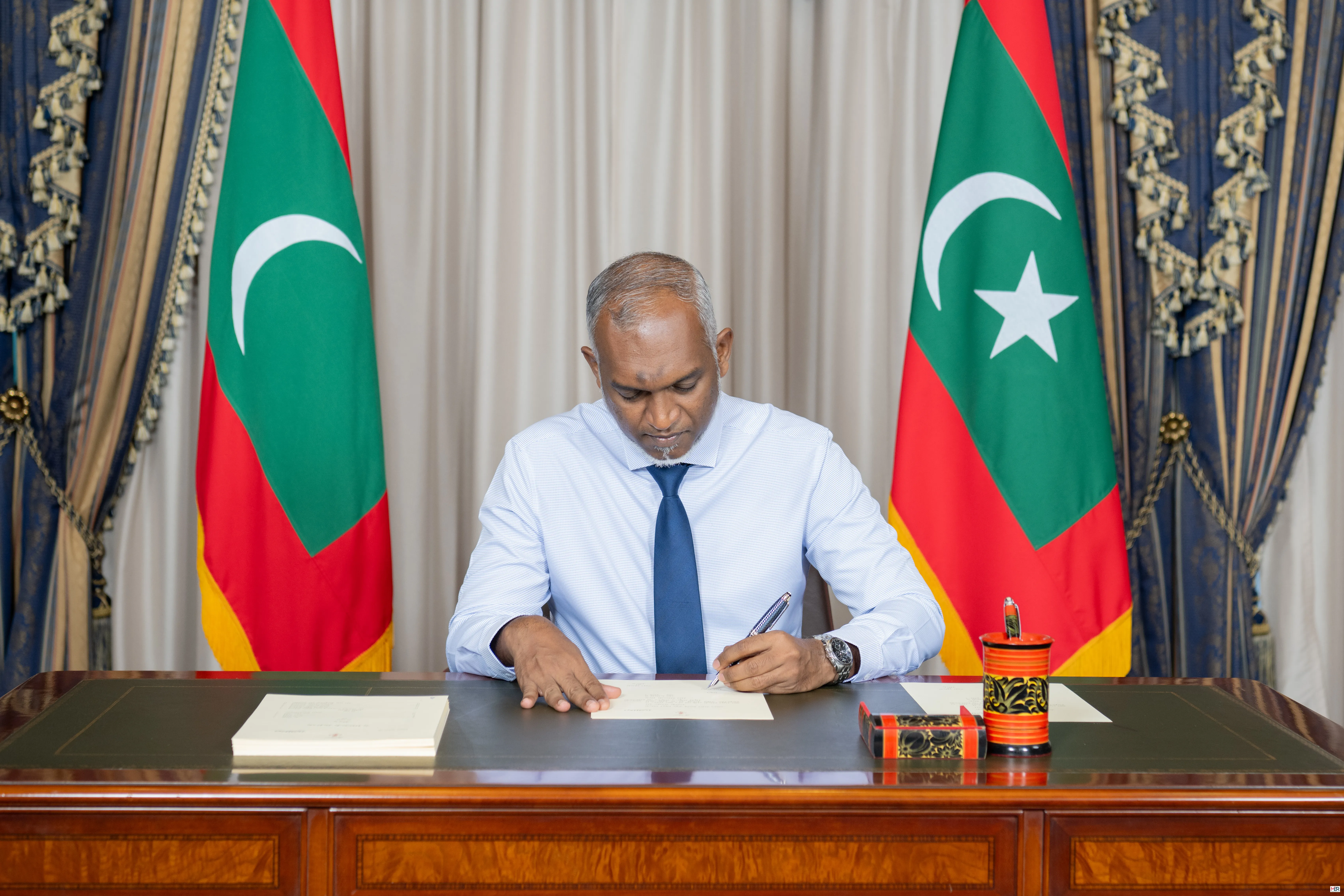
The Government has reaffirmed its Special Economic Zones (SEZ) framework, maintaining a high-investment model focused on nine strategic sectors, through a new presidential decree that restates both the eligible economic activities and minimum capital requirements for investors.
Under
Presidential Decree No. 1/2026, issued by President Dr Mohamed Muizzu, the
administration has formally reviewed and re-established the parameters set out
in the Special Economic Zones Act, in line with the law’s requirement for an
annual review and publication of SEZ eligibility criteria. The move preserves
continuity in policy while providing regulatory certainty for prospective
large-scale investors.
The SEZ Act
mandates that the President, in consultation with the Board of Investments,
specify each year the types of activities permitted within SEZs and the minimum
investment thresholds applicable to those activities. The law also requires
that this determination be reviewed before February and announced through a
formal decree. As part of this statutory process, provisions previously set out
under Presidential Decree No. 1/2025 were reviewed and republished in the
Government Gazette under the new 2026 decree.
The decree
maintains two key investment thresholds. Strategic investments must involve a
minimum capital commitment of USD 100 million, while sustainable township
development projects are subject to a significantly higher threshold of USD 500
million. For township developments, the decree specifies that the full minimum
amount must be allocated specifically to sustainable township components.
Nine categories
of strategic economic activity are permitted under the USD 100 million
threshold. These include export-oriented manufacturing, transhipment and
international logistics services, ports and airports, higher education
institutions and specialised hospitals, world-class research and development
facilities, ICT parks, international financial services and trade centres,
renewable energy projects, food security initiatives, gas, oil and mineral
exploration, and projects introducing technologies not currently available in
the Maldives.
By reissuing the
annual decree without altering the core structure, the Government has signalled
its intention to maintain a large-scale, capital-intensive SEZ model. Officials
say the approach is designed to attract major foreign and domestic investment
while ensuring that only projects of significant economic impact qualify for
special economic zone status.
Leave a comment
Comments
No comments yet. Be the first to comment!
Latest News
News
Visit Maldives Records Highest Income in Eight Years
11 Jun 2026
News
Ooredoo to Host Fun-Filled Children's Evening to Celebrate FIFA World Cup Kick-Off
11 Jun 2026
Opinion
Nature Health commentary urges harm-reduction shift on tobacco. Maldives policy points the other way.
11 Jun 2026
Opinion
No Extra Charges on Credit Cards; BML Working on Solution to Daily Budget Limit Constraints
10 Jun 2026