

Opinion
In 1980 we taught a nation to read. Today we begin teaching it to navigate the digital age
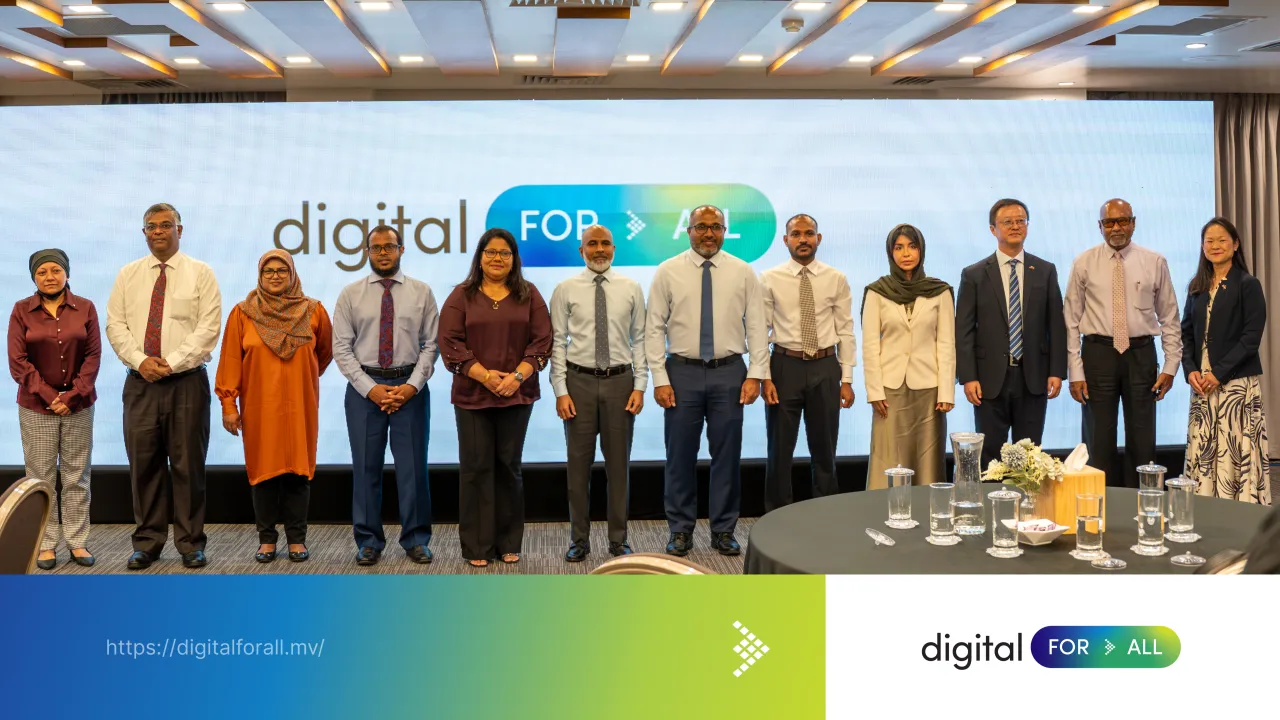
In 1980, the Maldives eradicated illiteracy through Asaasee Thauleem, a grassroots national campaign that mobilized communities to teach one another to read. Today, under the Maldives 2.0 agenda, the nation launches Digital for All, a structured, island-wide program to build digital and AI literacy, ensuring every citizen can confidently and safely navigate the digital age.
Siyah Khaleel
23 July 2026, 15:15
In 1980 the Maldives faced a hard truth. More than nineteen thousand citizens could not read or write.. The government's answer was Asaasee Thauleem, a national basic-education campaign led by President Maumoon Abdul Gayoom. It had no luxury of infrastructure. It used Radio Maldives, community halls, mosques and people's own homes as classrooms. Katheebs, magistrates and ordinary literate islanders volunteered as teachers. It ran on a single ethos: those who could read taught those who could not.
It worked. Within a decade, illiteracy had been all but eliminated. Today the Maldives has one of the highest literacy rates in the region. It remains one of the most successful national mobilizations in our history.
Today we begin the same work for a new kind of literacy.
The same problem, one generation on
Today the Maldives launches Digital for All, the national digital and AI literacy campaign, delivered under the Maldives 2.0 agenda. We have spent years building the machinery of a digital nation. Digital identity through eFaas. Connectivity to the atolls. Digital payments. digitalizing public services. That investment is real and significant. But it only returns value when people can actually use it. A service no one can navigate is not a service. An AI output no one can question is a risk, not a benefit.
Access is not the same as ability. In 1980 the gap was reading. In 2026 it is the confidence and judgement to use digital services and AI tools safely and well. The task is the same. Close the gap, island by island, until capability becomes normal.
What this is, and what it is not
This is not an awareness campaign. It is a measurable national capability program, running from 2026 to 2028. Participants follow structured learning pathways, demonstrate their progress, and receive nationally recognized credentials. We measure capability, not attendance.
The reach targets are set now. 75,000 people every year, and 225,000 Maldivians by the end of 2028. Delivery covers every atoll, by design, not only Malé or the largest islands. Learning is developed in Dhivehi and English, with Dhivehi-primary delivery in communities and accessible formats for persons with disabilities. Participation is free for every citizen.
One national standard - N-DAC 1.0
Underpinning the campaign is N-DAC 1.0, the National Digital and AI Competency Framework. It is our single national standard for what digital and AI competency means, organized into six tracks and three proficiency levels, from Foundation to Advanced.
AI is not taught as a separate module. It runs through all six tracks, because evaluating an AI output, protecting personal data, spotting misinformation and keeping a human responsible are now part of everyday digital life. The structure draws on the best international models, including DigComp 3.0, UNESCO's AI competency frameworks and Singapore's SkillsFuture. The content, the language and the delivery are Maldivian.
Every participant earns recognition through the Digital Skills Passport, a citizen-owned record of learning that builds into a national credential. A badge earned on a remote island carries the same recognition as one earned in the capital.
Delivered by trusted local hands
Asaasee Thauleem was not run by a central team in Malé. It was run by the islands themselves. Digital for All follows that logic. We are building a distributed national network of delivery partners: island councils, schools, TVET providers, employers, SOEs and NGOs, all trained and certified through a common Training of Trainers program, all delivering against the same framework. Local trust, national standards. That is how a national campaign reaches every atoll.
Funding follows the same principle of integrity. The campaign will be financed through a national partnership of banks, telecoms, SOEs, corporations and development partners who support agreed outcomes. No funder controls learning content, assessment, participant selection or credential decisions. Recognition of a partner never implies endorsement of a product. That line is not negotiable.
We are not the first, and that is the point
Singapore's Digital for Life built a movement of more than 130 partners. Estonia had banks and telecoms finance training for over 100,000 adults. Rwanda's Digital Ambassadors reached millions through community facilitators. Finland's Elements of AI reached over 1.4 million learners. The pattern is consistent everywhere it has worked: government legitimacy, industry investment, community delivery, common standards, transparent measurement. It is also the pattern that worked here in 1980. Digital for All is built on both.
What success looks like
By 2028 the campaign ends, but the capability stays. A maintained national framework. A trained facilitator network. Reusable learning resources in Dhivehi and English. An operational Digital Skills Passport. Delivery routines embedded across councils, ministries, providers and employers. Success is when digital and AI competency becomes a normal, repeatable function of our institutions, not a campaign we have to run again.
Around 46 years ago, a generation of Maldivians taught each other to read, and changed the country. Today we begin the same journey for the digital age.
To the institutions and development partners reading this: this is a national outcome worth backing, and the door is open. Digital for All. Every citizen. Every atoll. Every skill that matters.
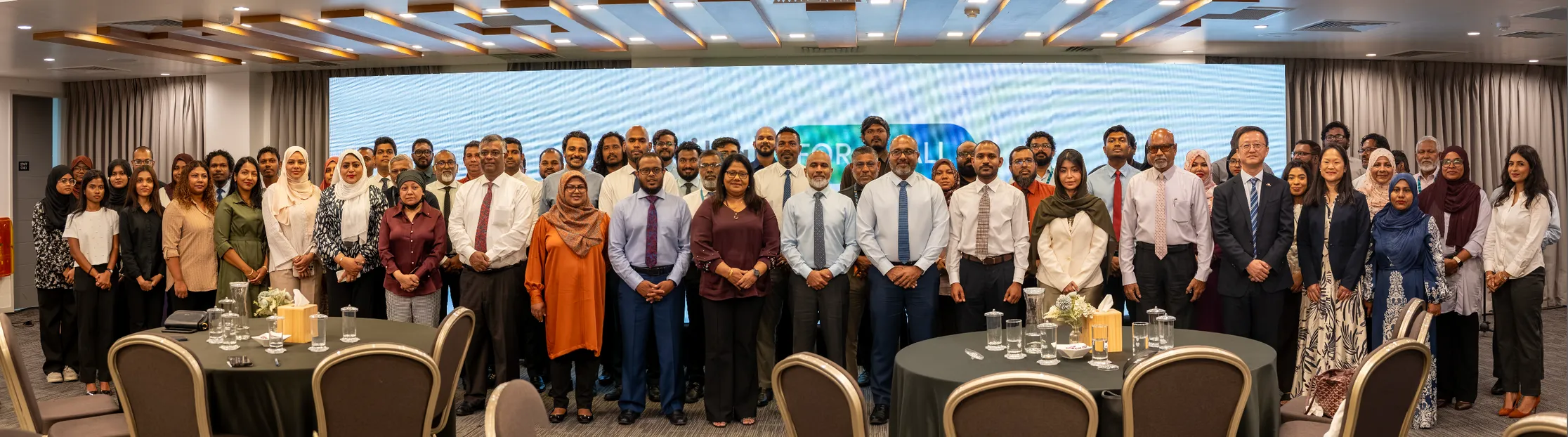
Digital for All is delivered under the Maldives 2.0 national digital transformation agenda, operationalised by Future Institute with MINDCo. To partner or learn more: partner@future.edu.mv , learn more at https://www.mindco.mv/newsroom/digital-for-all-campaign-launched
Editor’s Note: This article was written by Siyah Khaleel, Chairman of the Maldives Innovation and Digital Company and Digital Transformation Strategist at the President’s Office. It was originally published on LinkedIn and is republished here with the author’s permission.
Leave a comment
Comments
No comments yet. Be the first to comment!